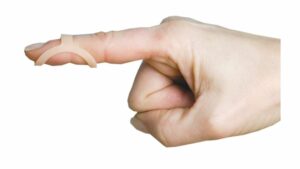
Finger injuries and long term conditions in the hand are common. A correctly chosen finger splint protects the joint, reduces pain and supports healing so you can return to everyday tasks more easily.
A finger splint holds one or more joints still in a safe position. This reduces strain on ligaments, tendons and bone, controls swelling and pain, and helps tissues heal in good alignment.
Splints are used for
• Sprains and stable fractures
• Tendon problems such as mallet finger or trigger finger
• Joint instability or deformity including swan neck and boutonniere
• Arthritis in the fingers and thumb
When and how long to wear a splint
Your healthcare professional will set the plan, but the pattern is usually
• Acute injuries such as fractures or fresh tendon damage
Worn all the time, including at night, for several weeks so the finger is protected at every stage.
• Longer term problems such as arthritis or mild tendon irritation
Worn for specific tasks or flare ups to reduce load on the joint.
Too much immobilisation weakens muscles and stiffens joints, so splinting is usually combined with simple exercises once it is safe to move. Always follow the advice given by your clinician.
Choosing a finger splint
Three points matter most
-
Diagnosis
The splint must match the injury or condition. A splint suitable for a fracture is not necessarily right for a tendon injury or arthritis. -
Fit and comfort
A good splint feels snug but not tight. Numbness, tingling, colour change or increased pain are warning signs and should be checked. -
Materials and hygiene
Smooth edges, soft padding and easy cleaning help prevent skin problems, especially when the splint is worn for long periods.